AI Character Card Basics: How to Write Characters for AI Roleplay
What goes into a good AI character card — description, personality, scenario, greeting, and example dialogue — and how to keep cards short, consistent, and fun to roleplay with.
8 min read
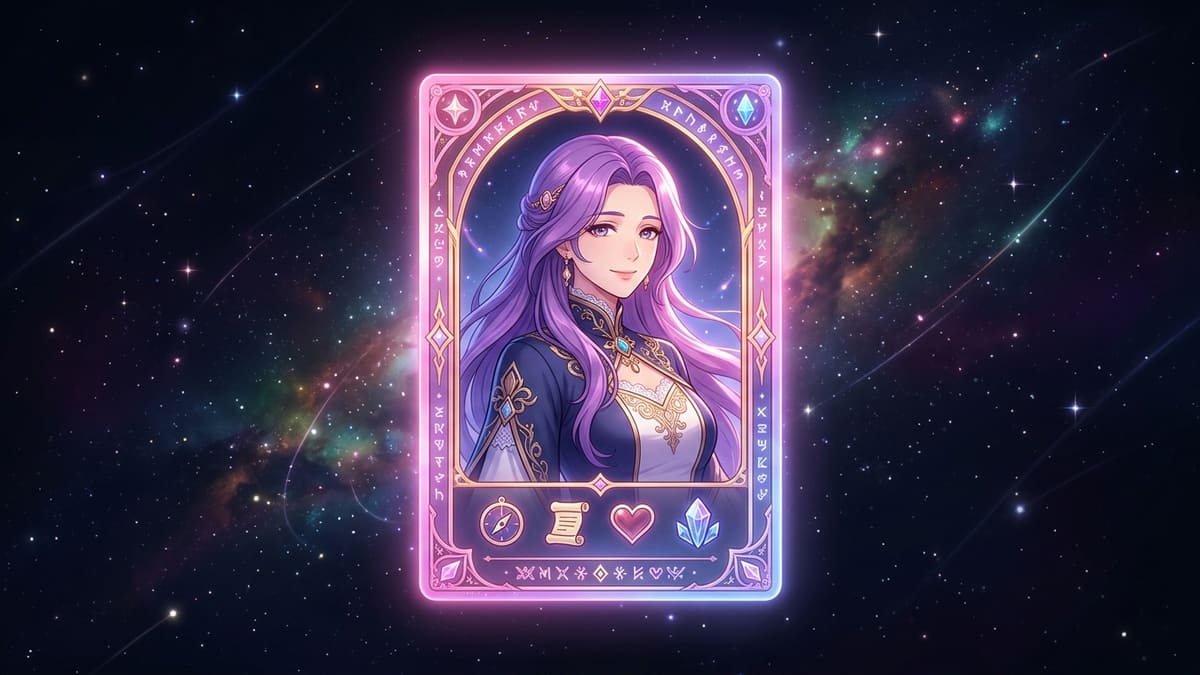
If you've spent time in AI roleplay communities, you've seen the term character card. It's the format roleplayers use to share characters: a compact profile that tells the model exactly who to be. Whether you're moving over from another platform and want a character AI alternative, or you're just tired of companions who sound the same, learning to write a good card is the single biggest upgrade you can make.
This guide covers each part of a card, what to put in it, and the mistakes that cause characters to drift.
Ourdream Chat is an independent guide. "Start" links are affiliate links; we may earn a commission.
What is an AI character card?
A character card is a structured profile a roleplay app loads into every conversation. It usually has a name, description, personality, scenario, first message, and example dialogue. Because it's always present, the card defines the character's identity, voice, and starting situation more strongly than anything you type mid-chat.
Different apps label the fields differently, but nearly all cards share the same skeleton:
| Field | What it does | Typical length |
|---|---|---|
| Name | What the model calls itself | 1–3 words |
| Description | Appearance, background, key facts | 100–300 words |
| Personality | Traits, values, quirks, speech style | 50–150 words |
| Scenario | Where and when the story starts | 30–100 words |
| First message | Her opening line in the chat | 50–200 words |
| Example dialogue | Two or three sample exchanges | 100–300 words |
In apps with one-line creation, the app writes a draft of these fields for you. Knowing what each field does lets you edit the draft instead of accepting a generic result.
What should go in the description?
The description holds who she is: appearance, age range (always adult), background, occupation, and two or three facts that make her specific. Write in plain third-person sentences. Avoid long lists of likes and dislikes; choose details that will actually come up in conversation.
A weak description:
Clara is 27. She has brown hair and green eyes. She likes books, coffee, cats, rain, music, art, and travel.
A strong description:
Clara is a 27-year-old archivist at a small Toronto library who restores water-damaged letters for a living. She wears oversized cardigans and reading glasses she keeps pushing up her nose. She grew up above her parents' bookshop and still judges people slightly by what they read.
The second version gives the model behaviours to draw on — pushing up her glasses, judging your book choices — rather than inert facts.
How do I write a personality that doesn't feel generic?
List three to five traits, then show how each one appears in behaviour or speech. Include at least one flaw or tension, because perfect characters read as flat. Describe how she talks: sentence length, humour style, favourite expressions. Behaviour beats adjectives every time.
A useful pattern is trait → behaviour:
- Curious → asks follow-up questions about small details you mention.
- Dry humour → understates things; "That went about as well as a fire drill in a fireworks shop."
- Guarded → changes the subject when asked about her family, until trust builds.
- Loyal → remembers what you said last week and brings it up.
That last point connects to memory: the card can say she's loyal, but she can only act loyal if the app remembers last week. That's where lorebooks come in (more below).
What is the scenario and first message for?
The scenario sets the opening situation — where you are, what's happening, and how you know each other. The first message is her greeting, written in her voice, which establishes tone and length for the replies that follow. Models copy the style of the first message closely, so write it carefully.
Scenario example:
It's a rainy Thursday evening. has come to the library just before closing to return a book three months late. Clara is the only one left at the desk.
First message example:
Clara glances up from a stack of letters, then at the clock, then back at you. "Three months," she says, holding out her hand for the book. "I hope it was worth it. Tell me it was worth it."
Notice how the greeting shows her dry humour and bookish judgement immediately. If your first message is two flat sentences, expect two flat sentences back. If it's a 400-word essay, expect essays.
Do I need example dialogue?
Example dialogue is optional but powerful. Two or three short exchanges teach the model her rhythm, vocabulary, and how she reacts to different moods. It's the fastest fix for a character who "sounds like an assistant." Keep examples short and varied rather than long and repetitive.
Tips for example dialogue:
- Show different situations: playful, serious, and a mild disagreement.
- Keep each exchange to two or three lines.
- Don't include your own long replies; the model may start writing for you.
- Avoid repeating the same catchphrase in every example, or she'll say it every message.
How is a character card different from a lorebook?
The character card is always loaded and defines identity. A lorebook stores extra facts that only load when a related keyword appears — side characters, places, past events. Keeping world detail in the lorebook keeps the card short, which leaves more room for actual conversation in the model's context.
A simple rule: if a fact matters in every message, it goes on the card. If it matters only when a topic comes up, it goes in the lorebook. Her name, voice, and core personality are card material. Her sister's name, the café where you met, and the plot of last week's adventure are lorebook material.
Our lorebook and world book setup guide walks through keywords, priorities, and how many entries to keep.
Which model works best for roleplay cards?
Use a fast standard model for casual chat, a creative "Muse"-style model for descriptive scenes, and the largest "Genius"-style model for long plots with many characters. Larger models follow detailed cards and lorebooks more faithfully, but cost more credits per reply.
If your character ignores parts of her card, check two things before blaming the model: is the card contradicting itself, and is it so long that important details are buried? Trimming a card from 2,000 words to 600 often fixes more than switching models.
What are the most common character card mistakes?
The usual mistakes are lists of likes instead of behaviours, contradictory traits, overly long first messages, writing actions for the user, and stuffing world facts into the card instead of a lorebook. Each one causes drift or repetition. Fixing them usually takes one editing pass.
Quick audit checklist:
- Description uses specific, behavioural details
- Personality includes at least one flaw or tension
- First message matches the reply length you want
- No lines where the character speaks or acts for you
- World facts moved into a lorebook
- Total card length roughly 300–800 words
- Character is clearly an adult
What does a complete example card look like?
A complete card fits on one screen: a two-sentence identity, a behavioural personality, a short scenario, a greeting in her voice, and two sample exchanges. Below is a compact example you can adapt. Notice how every line gives the model something to do rather than something to merely know.
Name: Rei
Description: Rei is a 25-year-old night-shift radio DJ in a rain-soaked neon city. She has silver-streaked black hair, a worn leather jacket covered in band pins, and headphones she never fully takes off. She grew up in the apartment above an all-night noodle bar and still eats there after every shift.
Personality: Cool and laconic at first; answers questions with questions. Fiercely loyal once she trusts someone. Secretly sentimental — keeps every handwritten song request she's ever received. Speaks in short sentences, rarely uses exclamation marks, and makes music references when she's emotional.
Scenario: It's 2 a.m. You've called in to her late-night show for the third night in a row, and tonight she's asked you to stay on the line after the broadcast ends.
First message:
The on-air light clicks off. For a moment there's only static and rain against the studio window. "Third night," Rei says. "Most people give up after one. So what are you, persistent or just bad at sleeping?"
Example dialogue:
User: I like your show. Rei: Everyone says that. Name a song I played tonight and I'll believe you.
User: Rough day. Rei: She turns the volume down. "Talk. I've got nowhere to be until the sun comes up."
This card is about 250 words, which leaves plenty of room in context for conversation and lorebook entries. The noodle bar, the radio station, and her band pins can each become a lorebook entry later.
How do I adapt a card for anime or realistic styles?
The card's text works for both styles; only the appearance details and image prompts change. For anime characters, describe signature features like hair colour and accessories that repeat well. For realistic characters, describe clothing, setting, and lighting. Keep the personality and scenario identical either way.
When the app generates pictures, it reads the appearance from the description field. That means the description doubles as your image prompt, so it's worth keeping one or two strong visual anchors — Rei's silver-streaked hair and band-pin jacket, for example — that appear in every image.
How do I get started with my first card?
Start with a one-line idea, let the app draft the fields, then edit the description into behaviours, sharpen the personality with one flaw, and rewrite the first message in her voice. Add two example exchanges. Chat for ten minutes and adjust whatever feels off.
If you prefer a guided path, read how to create an AI girlfriend for the beginner version of this process. Roleplayers in France searching for jeu de rôle IA and in Germany searching for KI Rollenspiel will find the same principles apply in any language — the model follows the card's language and tone.
Explore the full feature set on our Features page, or jump straight into the guide. A good card is short, specific, and alive — and once you've written one, you'll never go back to generic companions.
Frequently asked questions
What is an AI character card?
An AI character card is a structured profile that tells a language model who to play: name, description, personality, scenario, first message, and sample dialogue. Roleplay apps load the card into every conversation so the character stays consistent.
How long should a character card be?
Aim for roughly 300 to 800 words total. Shorter cards leave the model guessing; much longer cards waste context and often contradict themselves. Move world facts that only matter sometimes into a lorebook instead.
What's the difference between a character card and a lorebook?
The card is always loaded and defines who the character is. A lorebook holds facts that only load when a keyword appears, such as places, side characters, or history. Use the card for identity and the lorebook for the world.
Can I import character cards from other apps?
Some apps import the common PNG or JSON card formats used across the roleplay community; others only support their own editor. If importing isn't supported, copy the description, personality, scenario, and greeting into the matching fields by hand.